
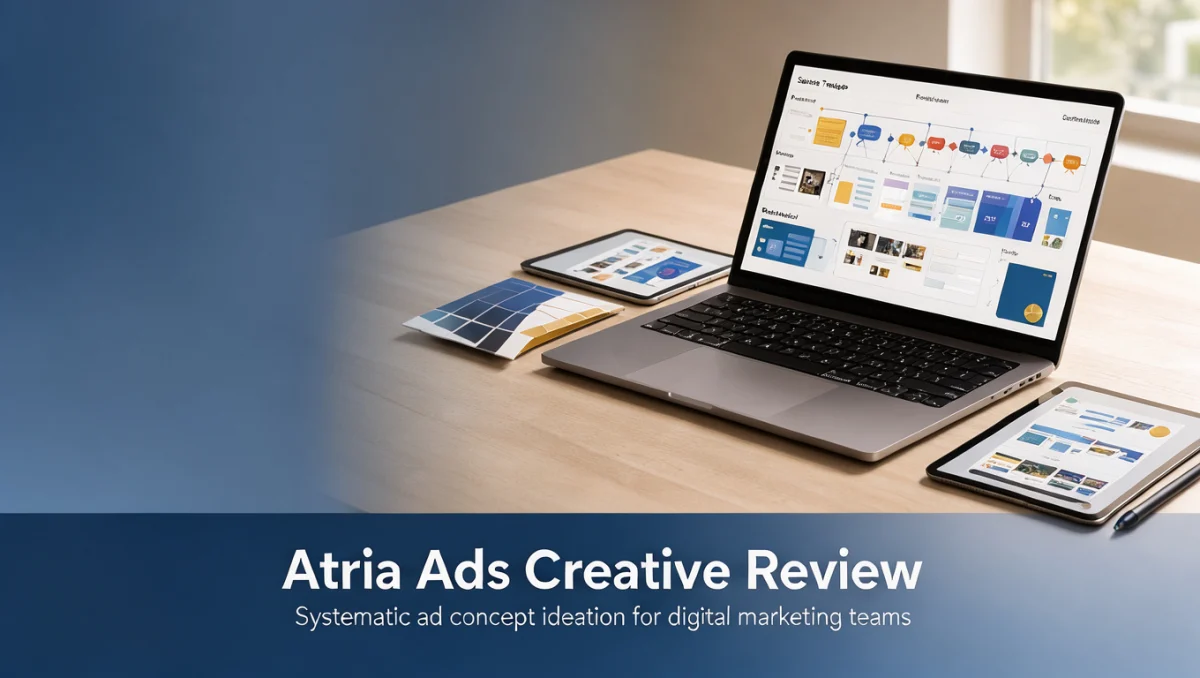
Marketing teams that run paid campaigns know the pressure of producing fresh creative every week. Creative fatigue sets in quickly when audiences keep seeing the same headline patterns, so many teams look for software that expands their brainstorming without bloating their budget. atria ads ai ad concepts is one such option, built to generate structured hooks, visual directions and short scripts for direct-response ads. Here is a grounded look at what it does well, where it falls short, and what to confirm before you pay.
Disclosure: Trustreviewsx may earn a commission when you buy through links on this page, at no extra cost to you. This does not affect our ratings. Our evaluation focuses on functional utility rather than promotional claims, and this article was drafted with AI assistance before being reviewed and edited by the Trustreviewsx Editorial Team.
| Metric | Summary Details |
|---|---|
| Trustreviewsx score | 7.6/10 |
| Best for | Media buyers who need a repeatable method for generating varied ad angles |
| Not ideal for | Teams that want a single platform covering both creative production and publishing |
| Key strengths | Angle structuring, marketing hypothesis exploration, quick message drafting |
| What to check before buying | User seat limits, monthly generation volume and export formats on the official Atria Ads website |
1. How Trustreviewsx Reviewed Atria Ads
We assessed the product against seven criteria: features, ease of use, pricing and value, integrations, audience fit, support and competitive position. Plans and limits change frequently, so we flag the details you should verify directly with the vendor rather than treating any figure here as final.
2. What Atria Ads Is and Who Benefits Most
Atria Ads is creative generation software that produces marketing angles, visual outlines and ad scripts for direct-response campaigns. Its core purpose is to help advertisers escape narrow thinking when they need many distinct positioning options on a tight deadline. By turning angle generation into a repeatable process, it gives teams a clearer way to test several selling directions for the same offer.
The most natural users are direct-to-consumer brands, boutique agencies and independent growth marketers who refresh creative regularly to keep paid social performing. Anyone considering atria ads ai ad concepts should first decide whether their bottleneck is idea generation or asset production. If it is the former, the tool fits well; if it is the latter, it will only solve part of the problem.
Compared with enterprise asset management systems that prioritize multi-brand governance, concept generators emphasize speed of ideation. Strategists can review drafts, adjust the core selling proposition and hand a finished brief to designers for assembly.
3. Core Capabilities for Campaign Development
Ideation is the foundation of the platform. Users enter audience pain points, product mechanisms and target outcomes, and the system proposes distinct marketing hypotheses. This structured mapping helps teams avoid recycling the same headline formula across campaigns.
3.1. Concept Framing and Messaging Exploration
Concept work starts with defining brand positioning pillars. The software suggests complementary angles, from social proof narratives to problem-agitation perspectives. Reviewing these variations can surface emotional hooks that a standard brainstorm might miss.
3.2. Visual Brief and Storyboard Generation
Once a written hook is chosen, teams need matching visual direction. The platform offers layout prompts, focal point suggestions and pacing notes suited to short-form formats. These give junior designers a clear conceptual target for static graphics or video storyboards.
3.3. Iterative Script Drafting for Multi-Channel Placement
Script features organize drafts into blocks: an attention-grabbing opening, a problem illustration, a product introduction and a closing call to action. Media teams can tune the tone to suit specific buyer personas before sending copy for review.
4. Ease of Use and Workflow Speed
The interface relies on modular input fields that keep the kickoff process manageable. Marketers do not need a technical background to start, since prompts walk users through the brand context step by step.
Expect an initial calibration period. Early outputs arrive quickly, but aligning them with strict brand voice rules takes deliberate prompt work. We recommend allocating onboarding time so every contributor follows the same prompt guidelines. For solo marketers the learning curve is gentle, because navigation centers on submitting prompts and exporting concepts. To compare creative software usability standards more broadly, see the guidance on Trust Bench X.
5. Pros and Cons
Specialized ideation software delivers clear gains during brainstorming, but buyers must confirm how the generated concepts fit into downstream design and video production.
5.1. Advantages
- Speeds up initial angle brainstorming by proposing varied psychological hooks.
- Lets solo media buyers produce structured creative briefs without a dedicated creative team.
- Supports disciplined ad testing by grouping concepts into clear direct-response themes.
- Pairs visual staging suggestions with written copy.
5.2. Limitations
- Generated concepts still need human review to meet industry compliance requirements.
- Visual suggestions must be turned into finished assets using separate design tools or designers.
- Output precision depends heavily on the specificity of the inputs provided.
6. Atria Ads vs Similar Tools
The creative software market includes tools built around different philosophies. AdCreative.ai focuses on assembling visual banners and rendering graphics, while Jasper covers broad enterprise copywriting across blogs, emails and campaigns.
Atria Ads concentrates on direct-response angles and conceptual staging. If you need finished graphics with preset typography, a visual assembly suite may deliver results faster. Teams that already have skilled editors but lack fresh campaign angles are the ones who gain most from a dedicated ideation tool.
| Software Category | Primary Strength | Operational Focus | Best Suited For |
|---|---|---|---|
| Atria Ads | Direct-response concept formulation | Angles, scripts and visual briefs | Performance advertisers needing fresh creative hooks |
| AdCreative.ai | Automated banner graphic assembly | Display layouts and image rendering | Teams prioritizing rapid visual banner variations |
| Jasper | General enterprise copywriting | Long-form content, email and social copy | Marketing departments producing multi-format editorial assets |
7. Who Should Use Atria Ads?
Whether it fits depends on daily responsibilities and team structure.
7.1. Freelance Growth Consultants
Independent consultants managing several paid client accounts often handle strategy without an agency design team. Rapid concept briefs give clients clear direction before production budgets are committed.
7.2. In-House Brand Marketing Teams
Internal managers running acquisition channels can use the tool to break out of repetitive promotional angles and test new framing for established products.
7.3. Performance Creative Agencies
Agencies producing many assets each week can use the software during strategy sprints. Draft concepts serve as starting points, then get refined, scripted and passed to editors.
7.4. Teams That Should Look Elsewhere
Organizations in heavily regulated sectors with pre-approved messaging may find automated ideation inefficient. Businesses that need one suite covering asset hosting, publishing and media analytics should consider broader marketing cloud platforms.
8. How to Choose the Right Plan
Subscription tiers usually vary by usage volume, administrative controls and collaboration features. Review your team's constraints against the vendor's rules before committing.
| What to check on the official website | Why it matters for your budget |
|---|---|
| Seat allocation policies | Extra team logins can change the total cost noticeably. |
| Generation volume limits | Monthly allowances determine how many ad angles you can produce without added charges. |
| Export and handoff options | Plain text, structured tables or brief exports affect how efficiently work moves to production. |
| Contract renewal cycles | Billing frequency affects flexibility when testing needs shift seasonally. |
Document your expected monthly test volume before visiting the sales page, then compare it with the stated limits so you choose a plan that supports your growth without interruptions.
9. Frequently Asked Questions
What should determine a budget for ad concept tools?
Base the budget on the balance between creative labor costs and monthly output. If the tool shortens bottlenecks and speeds up deployment, the cost can be justified. Factor in any secondary subscriptions needed for graphic assembly and video rendering alongside the ideation tool.
How should buyers evaluate concept quality before committing?
Prepare three product scenarios with different audience constraints and see how well the software handles niche positioning. Judge originality, adherence to direct-response structure and tonal flexibility across those tests.
What verification steps are needed before publishing generated concepts?
Set up human editorial checkpoints to confirm factual accuracy, regional regulatory compliance and brand voice. Automated tools offer directional ideas, but accountability for published ads remains with people who understand platform policies and consumer protection rules.
Where should teams look for official subscription terms?
Visit the official Atria Ads website to review current plans, seat limits and usage policies. Vendors adjust these parameters regularly, so checking the official portal is the only reliable way to confirm terms before paying.
10. Final Verdict on Atria Ads
Atria Ads offers a focused direct-response ideation framework that helps performance teams keep a steady testing rhythm. By turning abstract angles into actionable briefs, it smooths collaboration between strategists, copywriters and designers.
| Criterion | Score /10 | Reason |
|---|---|---|
| Features | 7.8/10 | Capable angle ideation, script staging and visual brief generation built for direct-response work. |
| Ease of Use | 8.4/10 | Clean guided inputs let marketers produce concept drafts without complicated setup. |
| Pricing and Value | 7.2/10 | Confirm generation allowances on the official site to ensure they match your campaign volume. |
| Integrations | 7.0/10 | Handoffs require manual steps, so verify export options if your pipeline is large. |
| Audience Fit | 8.0/10 | Strong match for direct-to-consumer advertisers and growth agencies that test systematically. |
| Support | 7.1/10 | Check available documentation and service channels on the vendor portal. |
| Competitive Position | 7.5/10 | Distinct in direct-response ideation, though visual suites suit teams that want finished graphics immediately. |
Trustreviewsx score: 7.6/10 overall, based on the seven evaluation criteria.
Marketing teams running intensive direct-response campaigns will value the structured approach to creative variety. Teams with light testing needs, or those seeking fully automated visual production, should first check whether simpler graphic templates meet their current stage. For operational questions, contact Trustreviewsx through our contact page or connect with the editorial team on LinkedIn.
See More Artificial Intelligence